

Staying Alive: The Breakthrough that Lets Vegetative Patients Communicate With Us
 Updated: Oct. 04, 2018




As doctors fight for the final say, the latest neuroscience is redrawing the boundaries of life and death while revealing a scary truth-that maybe we shouldn’t be so quick to pull the plug.
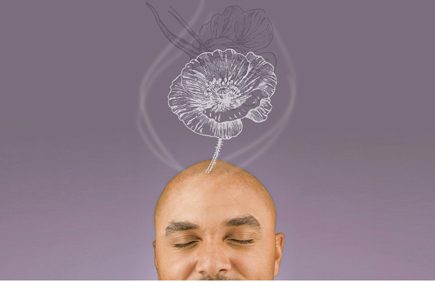
Illustration: Serge Bloch
Hassan Rasouli checked into Toronto’s Sunnybrook Hospital to have a brain tumour removed on October 16, 2010. The surgery was successful, but the then-59-year-old engineer contracted bacterial meningitis and fell into a coma. In January 2011, Hassan’s doctors determined that he was in a persistent vegetative state, with virtually no chance of regaining consciousness. They recommended his feeding tube and ventilator be taken away.
The Rasouli family, who had emigrated from Iran six months earlier, were thrown into turmoil. Daughter Mojgan, 29, and her 23-year-old brother, Mehran, agonized over letting their father go. Was there really no hope? The doctors put great pressure on their mother, Parichehr Salasel, to make a decision. A doctor in her native country, Salasel refused to give up. “We all still felt his presence,” says Mojgan.

End-of-life protocols in Canada, however, are murky. Consent from a substitute decision maker-in this case, Hassan’s wife-is required to pull the plug; but if doctors believe there is an ethical justification for allowing a patient to die, they can turn to a specialized tribunal to get permission to discontinue life-extending treatment. Hassan’s doctors insisted he was suffering needlessly and that they were prepared to act in his best interests. The Rasoulis won a court order confirming their right to decide Hassan’s fate, but the doctors appealed. They lost that appeal and took their case to the Supreme Court.
Then something unexpected happened: Hassan started to show improvement. Last summer, he was blinking to words spoken in Farsi and, according to Mojgan, could give a weak thumbs-up. Sunnybrook’s neurology department reassessed him, upgrading his condition to minimally conscious, but his doctors pressed ahead with their case anyway, hoping a victory would force changes in existing life-support protocols. With court arguments looming, Mojgan, a master’s student in urban planning, wondered if more concrete proof existed of her father’s consciousness.
Illustration: Serge Bloch
In January of this year, Mojgan came across a paper by 46-year-old Cambridge University neuroscientist Adrian Owen. For 15 years, Owen had been using fMRI machines-which record blood flow to measure brain activity-in an attempt to confirm consciousness in coma patients. During a 2010 study, he placed 54 patients in his scanner and asked each of them to imagine playing tennis, and to then imagine navigating through their homes-tasks that create dramatically different patterns on fMRI scans. Of the 54 patients, five were able to respond to Owen’s commands. One of his most successful cases-a 22-year-old dubbed “Patient 23” who had been in a vegetative state for five years following a car accident-performed the task so well, he was able to answer simple questions by thinking of tennis for “yes” and his house for “no.” It was a stunning breakthrough: Owen was communicating with a man whom many would have deemed as good as dead.
Mojgan’s mind raced as she typed Owen’s name into Google. Among the search results she found an announcement: Owen had relocated to the University of Western Ontario in London, a mere two-hour drive from Toronto. Three months later, the neurologist was at Sunnybrook, questioning the family about Hassan’s condition. After obtaining the hospital’s permission and a referral from Hassan’s doctor, Owen put him in a scanner.
According to Mojgan, Owen called two weeks later with the news: Her father showed signs of consciousness. He explained that, although nothing had happened when her father was asked to imagine walking around his house, he emitted a faint signal whenever he was asked to imagine playing tennis. For Mojgan and her family, it was a moment of indescribable validation.
“You only need one reportedly vegetative patient to show a response like this to know there are others out there,” says Owen, sitting in his office at Western. He decided to move most of his team to Ontario after the university offered him the post of Canada Excellence Research Chair in Cognitive Neuroscience and Imaging, a position that comes with $20 million in funding. “Once we’d established we could reveal consciousness in patients that had been lying there for years,” he adds, “continuing the research was an easy decision.”
Next: Why a good or bad diagnosis can mean
the difference between life and death.

Illustration: Serge Bloch
Consciousness disorders are assessed using the Coma Recovery Scale-Revised (CRS-R), which establishes a variety of behavioural markers to determine severity. It begins with the “locked-in”: those who are awake and aware, but can only communicate using tiny movements-say, by wiggling a finger. Next is “minimally conscious”: patients who occasionally react to auditory, visual or tactile cues, but are otherwise nonresponsive. Finally, we arrive at “persistent vegetative” patients, who show no signs of consciousness. These individuals are typically “warehoused” in intensive care and are never given the opportunities to communicate set aside for those with less severe impairments, leading family members to consider end-of-life options. In other words, diagnosis can mean the difference between life and death.
Although Owen contends that the CRS-R is an extremely useful rubric, he cautions that there are two flaws in the way we currently evaluate patients. First, studies have shown that human observation can be wrong up to 40 percent of the time. Minimally conscious patients typically weave in and out of awareness; they may be able to blink an eye for an hour on Tuesday, then lie completely unresponsive on Friday.
But there’s an even more obvious-and sometimes fatal-flaw: Who’s to say that all locked-in or minimally conscious patients are able to wiggle a finger or visually track an object? Is it not conceivable, says Owen, that some patients might possess consciousness but no ability to move? “I’d suggest this to people, and they’d say, ‘The patient would convey it in some way. We would know.'” Owen laughs and shakes his head. “And I’d say, ‘Yes, but how?'”
In 2006, Owen published his successes using the tennis/house method in the journal Science. Some readers were skeptical. One psychologist, in a letter to the journal, suggested that “brain activity was unconsciously triggered by the last word of the instructions, which always referred to the item to be imagined.” In short, Owen’s patients may not have been conscious, but had an automatic reaction to the words “tennis” and “house.” In response, his Cambridge colleagues set out to prove that only a conscious person could perform the spoken requests. They anesthetized healthy volunteers, placed them in the scanner and asked them to imagine playing tennis. The volunteers could not.

Illustration: Serge Bloch
Judy Illes is a professor of neurology and the Canada Research Chair in Neuroethics at the University of British Columbia in Vancouver. She works with Owen, puzzling over what she calls the “gnarly” questions his studies provoke, including the possibility doctors may soon be given more discretionary authority over whether to halt treatment for vegetative patients at the very moment neuroscience seems poised to significantly alter our understanding of consciousness.
“Important concerns about the reliability of the science still have to be answered,” Illes says, “before we begin integrating this technology into clinical care.” She contends that, in the future, Owen’s tool may be used in court cases concerning end-of-life decisions by bringing evidence to the table. Owen’s findings won’t need to be used in the Rasouli case because he has shown responsiveness in more traditional ways, but “regardless of which side wins,” she explains, “the Rasouli case highlights the need for Owen’s technology.”
Toronto health-care lawyer Mark Handelman agrees that Owen’s method has the potential to upend critical-care protocols. “If the technology works, then of course it will be used in this way,” he says. “Science always complicates law, but science also improves law.”
Even so, families who have already followed through on “do not resuscitate” orders for their loved ones could receive Owen’s research like a punch in the gut. A study in the Canadian Medical Association Journal examining 720 patients with severe traumatic brain injury found that 32 percent of those patients died in hospital, with 70 percent of those deaths due to withdrawal of life-support. However, the use of fMRIs may swing the pendulum towards overcautiousness, encouraging families and physicians to keep barely-there loved ones alive.
Handelman points out that this would come at a cost. In Ontario, only about 1,000 intensive-care beds are available, and the annual price tag per bed for around-the-clock treatment is almost $1 million. It’s easy, he says, to imagine the debate Owen’s discovery will provoke: “If Dad, who will never wake from his coma, is in intensive care, whose heart surgery isn’t taking place?”
For the Rasouli family, it’s enough just to know that Hassan is aware. “Even being in a minimally conscious state, it means improvement,” says Mojgan, who is preparing for the Supreme Court case in December. She believes doctors shouldn’t have the right to overrule a family’s wishes, and hopes the judges will uphold the court order that has so far allowed her father to stay alive. “A ruling in our favour would help people like my father all over the country,” she adds. “He always said, ‘Don’t give up. Where there’s life, there’s hope.'”
