Heart-Healthy Meal Plan
 Updated: Sep. 28, 2018




Base your diet on these groups, getting the number of daily servings recommended, and your risk of heart disease will fall significantly-almost immediately.
Protein Power for a Healthy Heart
No food group offers more versatile protection from the causes of heart attacks than protein. Lean beef, eggs and pork are packed with homocysteine-lowering B vitamins. Fish delivers omega-3 fatty acids that keep heart rhythm steady and discourage blood clotting. Skinless chicken and turkey are low in artery-clogging saturated fat, and their protein keeps food cravings (and the risk of overeating) at bay. Beans-legumes such as chickpeas, black beans and kidney beans-are not only rich in high-quality proteins but are also one of nature’s richest sources of soluble fibre, which transports cholesterol out of your body and helps to hold blood sugar levels steady.
On the Menu: Fish, chicken, turkey, lean red meat, pork, eggs, beans.
Daily Servings: Two to three.
Serving Sizes: 50-100 g fish, poultry and meats; 6 tablespoons of beans as a main dish or 3 as a side dish; 2 eggs
Good Fats Are Better than Low-Fat
Why use butter that has saturated fat or crunch on questionable snacks packed with trans fatty acids when you could eat as if you spent your days beside the Mediterranean-spreading fruity olive oil on crusty bread or drizzling it over fresh vegetables and snacking on delicious almonds? Many studies have shown that these cornerstones of the Mediterranean diet protect your heart. That’s why olive oil and walnuts, which are good sources of omega-3 fatty acids, get top billing in this plan, too.
All are rich in monounsaturated fats. Eat them instead of saturated fats to lower LDL cholesterol, slightly increase HDL levels and reduce triglycerides. While you should eat very little saturated fat, monounsaturated fats should be part of your daily calorie intake. Just watch your portions-oils, nuts and nut butters are calorie dense, so a little goes a long way.
On the Menu: Olive oil, canola oil, nuts.
Daily Servings: One to three of each.
Serving Sizes: 1¼ -2 to 1 tablespoon oil; 30 g nuts.
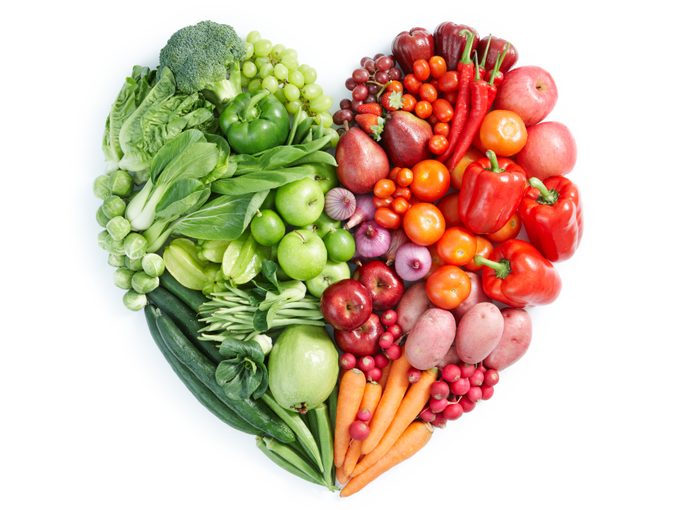
Fruit and Vegetables: Nature’s Cholesterol Cure
Our ancestors existed on wild produce, so researchers suspect that the human body evolved to expect large daily doses of the antioxidants, cholesterol-lowering phyto-sterols and soluble fibre found in fruits and vegetables. Without them (and most of us get too few servings of fruit and vegetables a day) heart risk rises.
On the Menu: All fruits and vegetables-fresh, frozen, dried or canned in natural juices.
Daily Servings: Three or four of fruit; four or five of vegetables.
Serving Sizes: 75 g vegetables, raw, cooked, canned or frozen; 1 dessert bowl of salad; 1 medium fruit such as apple, orange, banana or pear; 1 large slice of melon or pineapple; 2 small fruits such as plums or apricots; 1 cup of raspberries or strawberries; 1¼-2 cup fresh or frozen raw fruits or vegetables; 1 tablespoon dried fruit such as raisins; 1¼-2 cup fruit or vegetable juice; 3 tablespoons cooked legumes.
Whole Grains for Valuable High Fibre
Simply eating a high-fibre, whole-grain breakfast could help to reduce your risk of heart attack, as can switching completely from refined to whole grains. Whole grains are packed with vitamins and a wealth of heart-protecting phyto-chemicals, plus insoluble fibre to help digestion. Some, such as barley and oatmeal, also have cholesterol-lowering soluble fibre.
On the Menu: Whole-wheat bread, whole-wheat pasta, barley, bulgur; brown rice; whole-wheat and high-fibre cereals, including oatmeal.
Daily Servings: At least five.
Serving Sizes: 1 slice whole-wheat bread; 1¼-2 cup cooked cereal; 1¼-2 cup cooked rice, bulgur or pasta.
Dairy Foods for Better Bone Protection
Having milk on your morning cereal, a small container of yogourt as a mid-afternoon snack and grated low-fat cheese on your chili or pasta at dinner, boosts your intake of calcium, a mineral vital for healthy bone development. It also provides high-quality protein and essential B vitamins, zinc and phosphorus.
On the Menu: Skim or 1% milk, low-fat yogourt and reduced-fat cheese
Daily Servings: Two to three
Serving Sizes: 1 cup milk; 50 g reduced-fat cheese; 175 g low-fat yogourt