In Treatment: How Safe is Cleansing?
Are cleanses and elimination diets safe? Discover the potential risks and rewards with our panel of Canadian health experts.
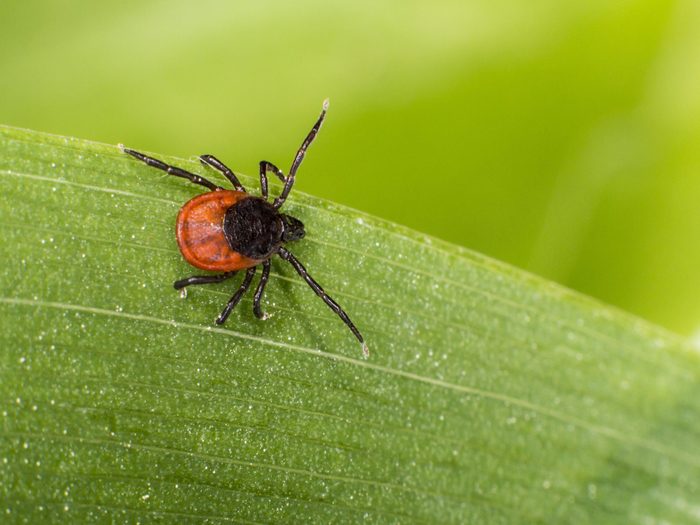
As temperatures rise around the country, emergency physicians are warning about the dangers of Lyme disease transmitted by ticks. Learn how to protect yourself and how to spot the symptoms of this potentially deadly disease.
As the number of ticks slowly make their way eastward across Canada, health authorities are warning that Canadians need to become more aware of the dangers presented by ticks. Ticks carry Lyme disease and Rock Mountain Spotted Fever. Both illnesses can be treated—if caught early on.
“The bite itself may be nothing more than a minor annoyance,” said Dr. Nick Jourils, president of the American College of Emergency Physicians. “It’s the disease that insects carry that can become a serious medical problem.”
Stopping bugs from biting with these simple precautions:
The Public Health Agency of Canada warns that symptoms of Lyme disease usually come in three stages.
Stage One: The first sign of infection is usually a circular rash called erythema migrans or EM. This rash occurs in about 70-80 percent % of infected persons and begins at the site of the tick bite after a delay of three days to one month. Other symptoms may include:
Stage Two: If Lyme disease goes undetected, the second stage can last up to several months with these possible symptoms:
Stage Three: If the infection continues to go untreated, the third stage of the disease can last months to years. Possible symptoms include chronic arthritis and neurological symptoms.
The Canadian Lyme Disease Foundation has an extenvise list of the symptoms to watch as well as a pictorial guide for the different varities of ticks found throughout the country and North America.
While not as common as Lyme disease, Rocky Mountain Spotted Fever is the most severe of tick-borne diseases.
According to the Centers for Disease Control and Prevention (CDC) initials symptoms start from between five to 10 days of being bitten and may include:
As the disease progresses symptoms include rash, abdominal pain, joint pain, diarrhea. If left untreated the disease can cause paralysis of the lower extremities, loss of bowel or bladder control, movement disorders, and language disorders.
The British Columbia Centre for Disease Control cautions against covering the tick with Vaseline (or grease) as well as applying heat or an open flame. Both these methods will not remove the tick. Instead follow the recommended method:
Contact the National Microbiology Laboratory (NML) at (204) 789-2000 or at ticks@phac-aspc.gc.ca to find out where to send your tick for testing.
If the tick has buried itself deep into your skin and has been on you for several hours or even a day or two, get your doctor to remove the tick. Don’t force it off since you run the risk of leaving mouthparts behind, which can cause infection.
If you enjoyed this article, be sure to sign up for our weekly health newsletter and receive more articles on health and well-being.
Looking for more great advice? Sign up to our newsletter for more useful tips, delivered straight to your inbox.
Are cleanses and elimination diets safe? Discover the potential risks and rewards with our panel of Canadian health experts.
0 comments
Discover your best options for alleviating Polycystic Ovary Syndrome symptons with our panel of Canadian health experts — a dietician, a doctor, and a fitness instructor.
0 comments
Earwax cures cold sores! Corpses cure boils! Urine cures acne! Discover 11 outdated folk remedies you should avoid at all costs.
0 comments
We all start losing bone tissue by the time we reach our mid-30s. And as our bones become thinner, they can lose strength and break easily. Take a minute to discover the fascinating new medical breakthroughs that are helping to treat and prevent osteoporosis.
0 comments
Got a minute? That’s all you need to learn a surprising amount about your health with these at-home self exams.
0 comments
Ask a baker about yeast, and you'll hear stories of the miracles it creates in the oven—airy pastries and crusty breads that can make you swoon. But ask a woman who has had a yeast infection, and you'll hear a very different tale. Having too much of a certain type of yeast in your body can make you miserable, leaving you itching and irritated in the most intimate places.
0 comments
Does your annual battle with pollen feel like the same misery, different year? We teamed up with our friends at The Doctors for surprising fixes for your biggest gripes.
1 comment
If you're gaining weight for no reason or having trouble losing it, check the contents of your medicine cabinet.
0 comments
Squeezing exercise into a busy schedule does the body good, but lingering bad habits may be keeping you from achieving greater health improvements.
0 comments
More than just the booster jump-starting your day, that morning cup of coffee can provide a variety of important health benefits.
4 comments
A brief guide to the risk factors associated with colorectal cancer.
0 comments
All hail Canada’s most clever, most unexpected and most significant advances of the year, from mind-reading prosthetic arms to fighting malaria with dirty socks.
0 comments
Chicken pox only last a couple of weeks but the itch can be more than your child can handle. Soothe their pain with these full-proof home remedies.
0 comments
You know you can get shingles if you’ve had chicken pox and you know how to treat it, but do you know what it is and how it develops? Read on to find out.
0 comments
If you’ve had chicken pox, you’re at risk for getting shingles. Here are a few ways you can try to decrease your chances of catching the itch.
0 comments
Advertisement
Enter the "Spring Into Health" contest for a chance to win 1 of 3 prizes!
Enter for a chance to win a 4-night stay for two at the Fairmont Chateau Whistler
Enter for a chance to win a Hallmark prize pack worth $500, and be featured in a future issue of Our Canada magazine!
Advertisement

Post a comment
1 comment
It is a BIG DISGRACE that Canadian doctors are not acknowledging this disease. I know of a person who has had to resort to obtaining treatments in the US at his own expense because doctos here in Ontario treated him like the plague when he asked over and over again if he could be tested for Lyme. At a young age he is now in a wheelchair but is determined to fight and get his life back. It has almost been 5 years. SHAME SHAME on you doctors who turn a blind eye. We have acknowledged west nile disease... what about Lyme Disease?????