

Not Simple Heartburn
 Updated: Mar. 20, 2019




CBC broadcaster and journalist Bill Cameron popped antacids for years without realizing that the common symptoms plaguing him pointed to something deadly-esophageal cancer
Monday, May 31, 2004, was a fresh, brilliantly sunny day in Toronto. I remember waking up and feeling an immediate rush of relief. This was the day of a long-awaited hospital test for my husband, Bill Cameron; the day we would finally determine why, for several months, food had been sticking in his throat.
His health problems had been building for years. He was a broadcaster, but his voice was getting thinner, often hoarse. A globe-trotting journalist with a yen for spicy condiments, he kept a stash of antacids in his travel kit and considered heartburn an occupational hazard. He was wheezy and was prescribed an asthma puffer. He had bouts of hiccups. He was told he might have a hiatal hernia, possibly sleep apnea, possibly an esophageal pouch. An ear, nose and throat specialist suggested an expensive regimen of private speech pathology.
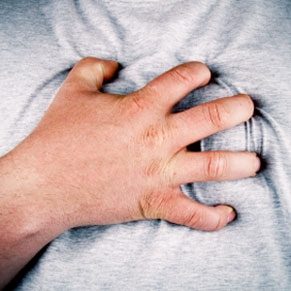
The swallowing trouble was inconvenient, at first-then frightening. By mid-winter, Bill occasionally would lurch from the table to throw up his dinner, pounding his breastbone to force up food that simply would not go down.
The May 31 appointment for an endoscopy-a procedure using mild anesthetic that would allow doctors to look inside his esophagus using a flexible scope-had been scheduled in late March, after he had undergone a barium swallow X-ray test.
It seemed like an eternity, but we waited it out. Today, we said, we’ll get some answers and get on with life.
But life as we knew it was about to change dramatically.
In a busy hospital hallway, the thoracic surgeon gave me the news. They’d extracted a piece of tissue for analysis, but he’d seen this too many times before.
“Esophageal cancer. Adenocarcinoma,” he said. “Advanced. Aggressive.”
My mind was swimming. I struggled to formulate a question.
“What about survival rates?” I asked, expecting reassurance.
“About 20 percent,” the doctor said, then, seeing my shocked face, quickly put his hand sympathetically on my arm.
There was talk of surgery, a clinical trial; it was all a blur. I’d never heard of esophageal cancer. The muscular tube that pilots food from the back of the throat to the stomach suddenly had become a pathway to life or death.
And then the killer question: “Why,” the surgeon wanted to know, “was this left so long?”
Esophageal cancer was once primarily squamous cell-the type linked closely to excessive drinking and smoking. But today, esophageal adenocarcinoma accounts for 70 to 80 percent of esophageal tumours. Adenocarcinomas are found in the lower part of the esophagus, close to the organ’s junction with the stomach, where acids can back up through a faulty lower esophageal sphincter and cause indigestion.
Esophageal cancer makes up less than one percent of new cancer cases in Canada. But it is one of the deadliest forms of cancer-second only to pancreatic. And its incidence is one of the fasting growing of all cancers in the Western World. “Most other types are flatlining,” says Dr. Gail Darling, director of the thoracic surgery clinical research department at Toronto’s University Health Network. “This one is growing exponentially. Before 1980, it was almost unheard of.”
Darling, a world-renowned thoracic surgeon and leading esophageal-cancer researcher, says about 80 percent of her patients are diagnosed in the late stages, so their long-term survival chances are extremely low. By the time my husband was diagnosed, the cancer had metastasized to his brain and liver; he had less than a five-percent chance of surviving.
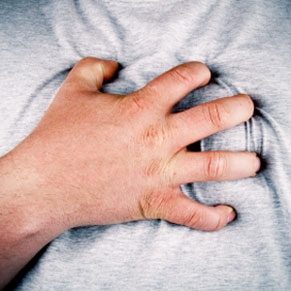
The main culprits behind esophageal cancer.
“The research, so far, points to heartburn and obesity as the main culprits,” says Darling. “We’re a well-nourished society. And we eat a lot of the wrong kinds of food.” Looking back, I realize that my husband, an unapologetic red-meat lover and former smoker with only a modest affection for fruit and vegetables, was displaying a stew of classic symptoms.
Carrying excess weight adds to the risk. A British study of about 300,000 cancer cases revealed that a large weight gain-on average, 33 pounds in men and 29 pounds in women-doubles the chances of developing esophageal adenocarcinoma and increases the risk of developing many other cancer types.
Diets low in fibre, fruits and vegetables and high in fat have also been linked to esophageal cancer.
“The gut is the first portal to health,” says Aileen Burford-Mason, a Toronto nutritional consultant and expert in the microbiology of the gastrointestinal tract.
“Anywhere cells have to replace themselves often-and in the gut, it is about every six hours-the chance of damage is great.
“A healthy gastrointestinal tract has a sphincter muscle that closes up when food goes down. Why is that so compromised? Why are so many people experiencing heartburn?” she says. “The answer is nutrition. Our tissues need to be repaired and replaced all the time, and the only way to do that is to eat appropriately.”
One third of the population experiences heartburn at any given time. There are many over-the-counter medications available to treat it, from antacids to acid blockers. But frequent, long-term heartburn-lasting longer than two weeks at a time-can signal more serious problems, including gastroesophageal reflux disease (GERD). And GERD, Darling warns, can lead to a premalignant condition called Barrett’s esophagus, in which squamous mucosal cells in the esophagus, after years of acid backup from the stomach, change to the type of cells-columnar mucosa-normally found in the stomach.
Nancy Westacott of Brighton, Ont., regularly downed antacid tablets -about 25 a day for 25 years-to quell her chronic heartburn. She was in her early 40s and obese. When she quit her high-stress job in the brokerage business and moved to a small town, her symptoms evaporated. “My heartburn hadn’t really stopped,” she says. “I just didn’t feel it anymore. My esophagus had taken on characteristics of my stomach, the cells had mutated and there was nothing left to ‘burn.'”
But Westacott began having trouble swallowing. She was diagnosed with esophagitis-inflammation of the esophageal lining caused by the backup of stomach acid. A biopsy in October 2004 revealed that she had a tumour, but that likely it was small, about the size of an Aspirin.
Diagnosed with Stage 1 esophageal adenocarcinoma, she underwent an esophagectomy-a gruelling, invasive surgery in which the cancerous part of the esophagus is removed and the organ is then reconstructed.
Two months later, surgeons found that the “small” tumour was actually the size of an orange. They removed almost all of Westacott’s esophagus in 2004, and she had chemotherapy and radiation.
Recurrences of esophageal cancer, usually aggressive and fatal, commonly occur within one to two years. Westacott’s been cancer-free since her treatment. “I’m one of the lucky ones,” she says.
“My stomach sits between my lungs: Eating and breathing at the same time is a chore,” says Westacott, “so I never eat a full meal at one sitting. At night, lying flat risks bile backing up from my stomach into my lungs, so I sleep sitting up.
“Life is different-but it’s good.”
Who is at risk?
Westacott’s case contradicts the definition of esophageal adenocarcinoma as a disease mostly of white men over 60. So does that of Mike Savage, brother of retired NHL player Brian Savage.
When diagnosed at 41, Mike had been suffering terrible heartburn for a decade. “He was popping six to eight Tums a day,” says Brian. “He never went to a doctor about it, though, because it was ‘just heartburn.’
“During my NHL career, I had the same symptoms as my brother. I was always popping antacids. Preparing for a game-the heavy meals, spicy food, loading up on coffee-and eating heavy right before bed all made for an unhealthy lifestyle.”
Brian got “scoped,” and was diagnosed with Barrett’s esophagus. And since Mike’s death in 2006, his father and mother have also been diagnosed with the condition.
Brian is now an official spokesperson for the Canadian Digestive Health Foundation (www.cdhf.ca). And he and his family have become part of a Mayo Clinic study in which researchers collect blood and tissue samples from families with Barrett’s esophagus.
Although Barrett’s esophagus is considered a risk factor for esophageal adenocarcinoma, the University Health Network’s Dr. Darling says just 1 in 300 cases actually becomes cancer. “Studies show reflux may be just as much of a culprit,” she says.
In November 2008, researchers in the United States announced they had identified several genetic markers that may pinpoint who is most at risk for esophageal cancer.
While scientists work to learn more, simple awareness of esophageal cancer remains key. And early detection offers the best chance for survival.
Says Nancy Westacott: “If I meet someone who tells me they need antacids all the time, I’ll say, ‘No, you don’t. You need a doctor.'”
“I tell my story every chance I get,” says Brian Savage.
“In fact, one person I told got scoped-and had esophageal cancer.”
My husband lost his battle with cancer nine months after he was diagnosed. He was 62. As a reporter who got to the bottom of every story but his own, he would have regarded knowledge of the links between a deadly cancer and simple heartburn as power.
But that knowledge, sadly, came too late.
