13 Signs You Need to See a Dentist Right Away
 Updated: Feb. 03, 2022




Don't ignore these symptoms of a potential dental emergency.

Don’t ignore these symptoms of a potential dental emergency
Dental emergencies are nothing to mess around with. If you’re having pain, bleeding, swelling, or other unusual symptoms in your mouth, it’s best to seek urgent dental care before the underlying problem becomes worse, says American Dental Association (ADA) spokesperson Ana Paula Ferraz-Dougherty, DMD, a dentist in San Antonio, Texas. Ideally, though, “prevention is key,” she says. “Instead of waiting until you’re in pain, doing your brushing, your flossing, eating a balanced diet, and getting your regular checkups with your dentist are the things that are going to help prevent dental issues.” Even so, dental problems that require an urgent visit to the dentist do happen. Here’s what to look for.
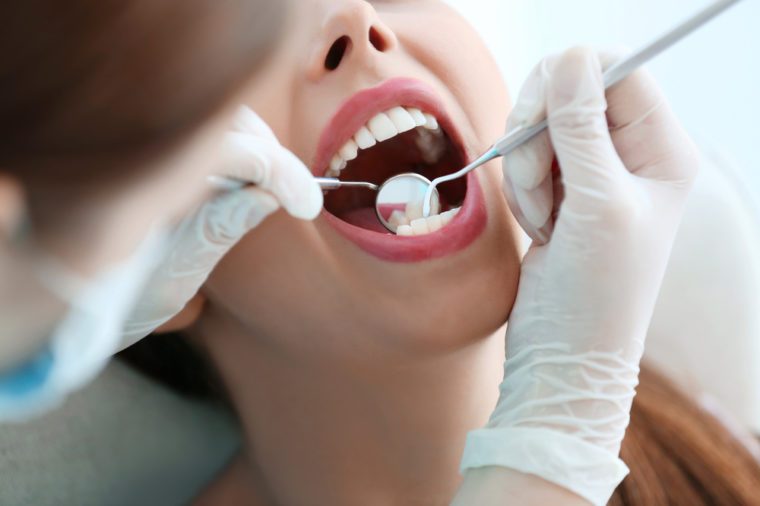
Your gums are red, inflamed, or bleeding
Don’t ignore the early signs of gum disease: get in to see the dentist as soon as possible. “The most common cause of bleeding gums is gum disease,” Dr. Ferraz-Dougherty says. “If you have any signs of swollen gums or bleeding when you brush or eat, it’s important to see the dentist to get that gum disease treated before it progresses.” At an early stage called gingivitis, gum disease may be able to be treated in the office with a cleaning, whereas more advanced stages may even require surgery, she says.
In addition, other diseases in the body may reveal themselves through gum problems, so it’s important to get them checked out right away. “Underlying systemic disease can manifest initially as bleeding gums; this includes diabetes, leukemia, and [other] cancers,” says John L. Pfail, DDS, chairman of the Department of Dentistry for The Mount Sinai Health System in New York. Because of high glucose in saliva, people with diabetes are also at higher risk of gum disease.
Check out the secrets dentists want you to know!
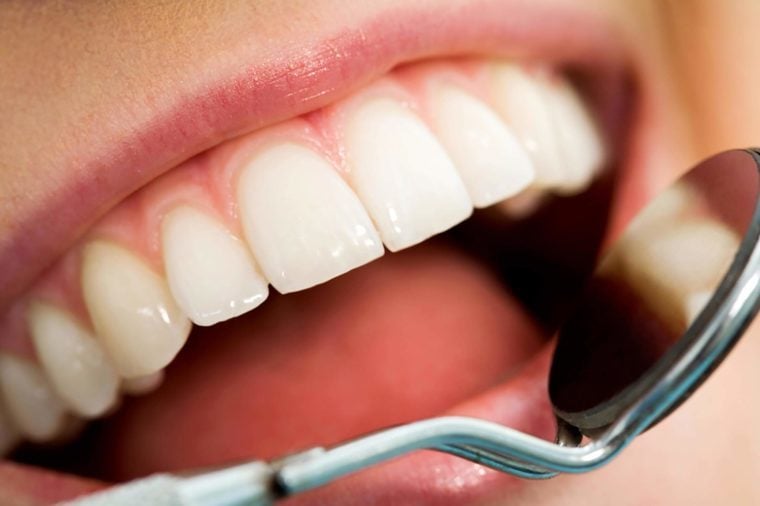
Your gums are pulling away from your teeth
If your gums are receding and exposing more of your teeth, “that’s a sign of a more advanced stage of gum disease,” Dr. Ferraz-Dougherty says. “If uncontrolled, gum disease puts you at higher risk for other health issues as well. There are links between gum diseases and cardiovascular disease and diabetes so it’s important to see your dentist so that the gum disease can be treated before it progresses or affects your health in another way.”
Trying to choose between floss pick vs. regular floss? Here’s what dentists recommend.
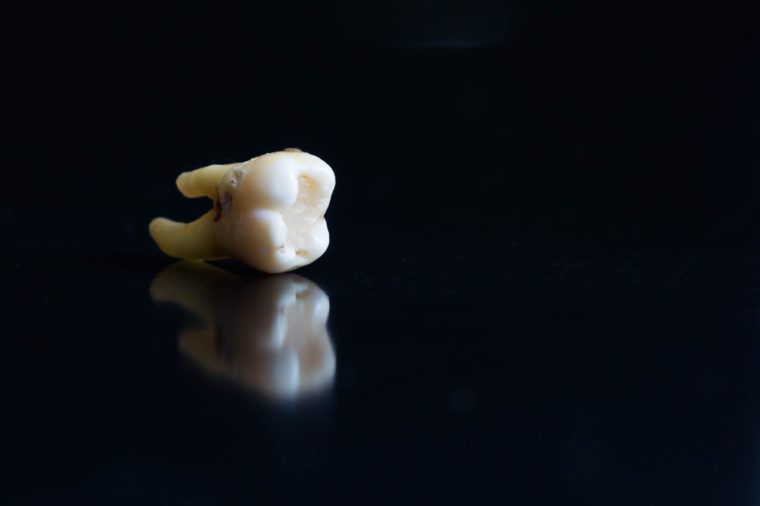
Your teeth feel loose or fall out
Losing teeth is only normal for children—not adults. If you feel like your teeth are shifting, moving around in your mouth, or any actually fall out, see a dentist pronto. Besides a blow to the mouth, what can cause teeth to come loose? “If left untreated, gingivitis can progress to disease which involves the bone surrounding the teeth, which in turn leads to loose teeth, pain, and the eventual loss of teeth,” Dr. Pfail says. “Teeth are secured into the mouth by bone and a thin muscle attachment called a periodontal ligament to the bone. Any damage to these structures surrounding your teeth can cause mobility of the teeth.”
In addition, the National Institutes of Health (NIH) reports that osteoporosis, bone loss that is common in older people, may also cause teeth to become loose through a weakening of the jaw bone. Women with osteoporosis are three times more likely to have tooth loss than those who don’t have it, says the NIH.
These are the diseases doctors are most likely to miss.
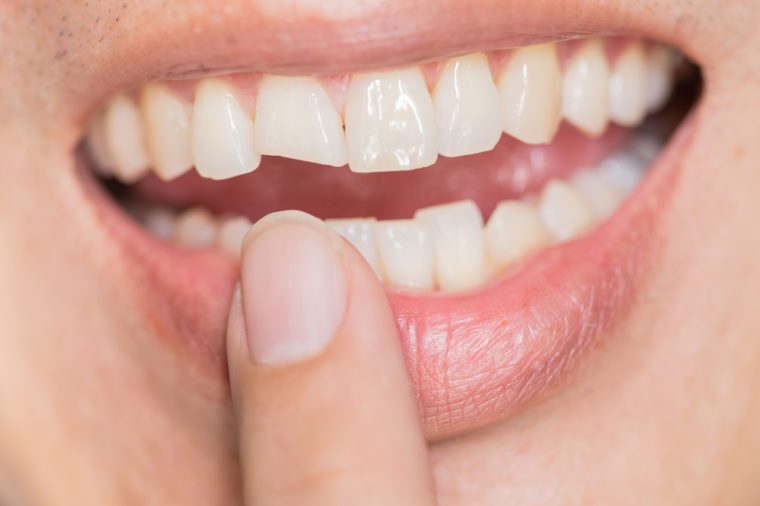
You crack a tooth
A cracked tooth requires an emergency visit to a dentist because if left untreated, not only can it cause pain and sensitivity, but it also creates a pathway for bacteria to enter the tooth, possibly leading to infection. “The sooner the better if you feel like you cracked your tooth,” Dr. Ferraz-Dougherty says. “If it’s just a small crack we can fix it with a filling; if it’s a bigger crack it may need a root canal. Sometimes we cannot even save the tooth—if it’s cracked too far down the tooth may need to be extracted.” A potential cause of cracked teeth, she says, is teeth grinding, so if you grind your teeth, “it’s important to get evaluated, as you may need a night guard to help protect your teeth when you sleep, which is when the majority of people grind them.”
Use these tips to protect your teeth from coffee stains.
You have pus collecting in your mouth
Yes, gross: If you notice any pus in your mouth, call your dentist right away. “Pus collection in a spot in the mouth can be a dental or gum abscess and should be addressed immediately,” says Uchenna Akosa, DDS, director of Rutgers Health University Dental Associates in New Brunswick, New Jersey. “It is a sign of infection and can spread if not treated and cause more serious medical problems.” In the most extreme cases, she says, “bacteria from an abscessed tooth can spread to the brain and can be fatal.” Untreated dental infections can also lead to sepsis. Antibiotics, draining the infection, and a root canal are possible treatment options to help prevent these complications.
Here are more strange symptoms that can signal a serious disease.

You have extreme tooth sensitivity
Don’t suffer with this annoying dental symptom: Get help not only to reduce the pain of tooth sensitivity to hot, cold, or spicy foods, but to get to the “root” (pun intended) of the problem as soon as possible. “Causes can include tooth decay, which can involve exposure of the nerve tissue inside the tooth,” Dr. Pfail says. “Teeth that are fractured can also cause extreme tooth sensitivity. Gum recession, which exposes the dentin covering the root surface can cause sensitivity due to changes in the microscopic tubules, or tiny channels, which can transmit pain to the nerve. Extreme tooth grinding, or bruxism, can also lead to internal inflammation of the nerve tissue in the tooth.” In addition to treating the underlying problem, “we could put you on a sensitive toothpaste, we could do a filling to cover that area, or we could do a gum procedure to recover that area,” Dr. Ferraz-Dougherty says.
Don’t miss the 10 things dentists always do to prevent tooth decay.

Your tooth feels numb
Along with too much sensation, a lack of sensation in your tooth is also a sign you should have your mouth checked out now. “If your tooth feels numb that could be an indication that your tooth might need a root canal,” Dr. Ferraz-Dougherty says. “If a tooth is cracked or has a big cavity and the nerve dies that can give you a numb feeling.”
In addition, “injury or trauma to a tooth, biting into something hard, teeth grinding, or a dying tooth from chronic tooth decay can all cause a tooth to be numb,” Dr. Akosa says. “They all cause the tooth to lose access to nutrients and blood flow, resulting in numbness.”
Your jaw is swollen, clicks, or won’t open
It’s not just the teeth that can have oral emergencies: Jaw issues should be seen ASAP by the dentist as well. “When it comes to any issues with the jaw or any changes in the way it usually functions, you should be on high alert,” Dr. Pfail says. “If your jaw becomes locked, open or closed, see your dentist immediately because they can reset it.”
Swelling around your jaw area could be a sign of an infected tooth, or a type of growth such as a cyst or even a tumour, “so that’s another major reason to get it checked out,” Dr. Ferraz-Dougherty says. “Difficulty opening or closing, or clicking or popping could be a sign of TMJ disorder, or temporomandibular disorder, caused by many different things, including an uneven bite.” Addressing TMJ issues earlier rather than later can result in easier treatment such as a night guard or braces; more advanced cases may require surgery, she says.
Learn about these home remedies for a toothache.
You have a mouth sore that won’t go away
Everyone has a mouth sore once in a while, but if one sticks around, get in to see the dentist right away, as it could be a sign of oral cancer. “If the sore does not disappear within seven to 14 days, see a dentist immediately for an oral exam and cancer screening,” Dr. Akosa says. “A biopsy may be performed to determine the cause of the sore.” In addition, any strange bumps or even colour changes in your mouth that last more than a week should also be evaluated immediately, Dr. Ferraz-Dougherty says.
Make sure you know these signs of oral cancer.

You have persistent bad breath
It’s not just embarrassing: Bad breath could be caused by a serious health issue, so don’t wait to see your dentist to determine the source. According to Dr. Akosa, a persistent bad odour could be a sign of underlying disease, anything from an infection to metabolic disorders (including diabetes), acid reflux, and even cancer. “It’s important that you go see a dentist so that we can rule out all of these things and figure out what’s causing it,” Dr. Ferraz-Dougherty says.
You have a bad taste in your mouth
Along with bad breath, a persistent bad taste that’s not from something you ate or drank could be another sign something is wrong and warrants an immediate visit. “Bad taste can be caused by gingivitis, oral thrush or yeast infections, respiratory infections like tonsillitis or colds, Hepatitis B, or wisdom teeth coming in,” Dr. Akosa says.
In addition, “sometimes people get a metallic taste in their mouth that could be a side effect of a medication; it could also be a side effect of hormonal changes specifically in women,” Dr. Ferraz-Dougherty says.

Your mouth is constantly dry
A frequent dry mouth, which might also feel sticky, is cause for concern because it can lead to infection. “Saliva is very important in lubricating our mouth and also has proteins in it that help to combat the cavity process, so without that saliva, you’re at a much higher risk of getting cavities quickly—and the cavities get big very, very fast,” Dr. Ferraz-Dougherty says. “Dentists can give you special rinses and toothpaste for dry mouth, but there are also prescription medications that can help to promote salivary production in your body.”
Dry mouth is often a side effect of medication for other issues, such as high blood pressure, diabetes, and cholesterol, Dr. Ferraz-Dougherty says. In addition, dry mouth is one of the major symptoms of Sjogren’s syndrome, an autoimmune disease that attacks glands that make moisture. If another cause for your dry mouth isn’t found by your dentist, Dr. Ferraz-Dougherty says, you’ll be referred to a doctor for evaluation.
Find out the things dentists never put in their mouths.
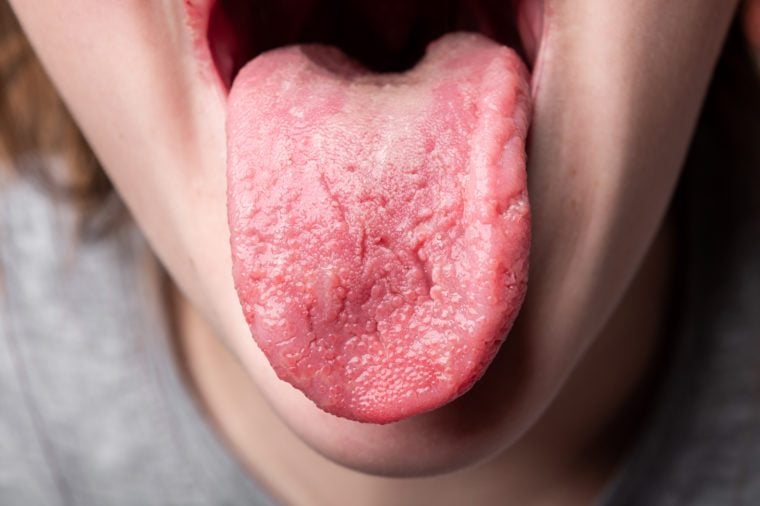
Your tongue has changed texture
Any weirdness with your tongue should be looked at by a dentist ASAP. “Any changes in texture, any lumps, bumps or sores, or any change in sensation of your tongue would be an indication to go see your dentist,” Dr. Ferraz-Dougherty says. “That’s something we take very seriously because the tongue is one of the more common areas for oral cancer, so it’s important to get that checked out.” It’s also possible that a change in texture of the top surface of your tongue could be caused by “hairy tongue,” a fairly harmless condition in which the small bumps on your tongue called papillae build-up; however, you’ll still need to see your dentist for a diagnosis.
Next, discover the health clues hiding right on your tongue