The Surprising Health Benefits of Pumpernickel Bread
 Updated: Apr. 19, 2021




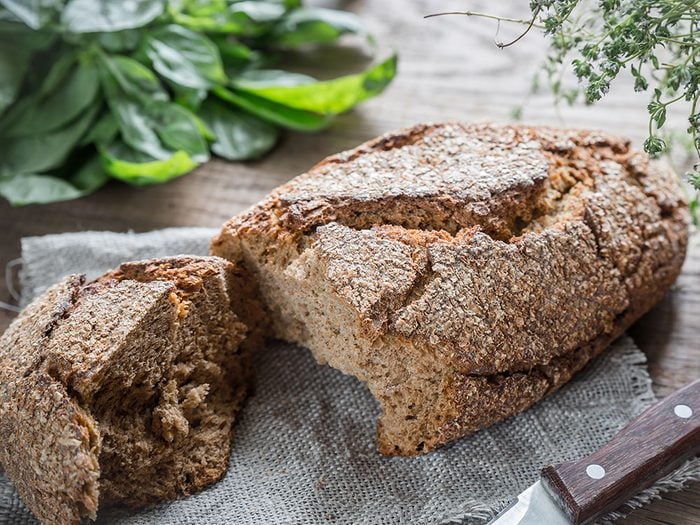
Go ahead, file pumpernickel bread under "delicious" and "nutritious!" Here's why this hearty staple scores big with health experts.
The Potential Health Benefits of Pumpernickel Bread
1. Pumpernickel bread has a low glycemic load (GL)
Traditional pumpernickel bread is made with coarsely ground rye flour (and perhaps some wheat flour) and is fermented with sourdough starter. The acetic acid from the starter and the soluble fibre in rye keep the glycemic load (GL) of the bread low—much lower than that of white or even whole wheat bread. (Glycemic load is the measurement of how much carbohydrate you are consuming.)
2. Pumpernickel bread aids digestion
One Canadian study found that pumpernickel bread had four to eight times as much resistant starch as breads made with wheat or barley. Resistant starch benefits blood sugar because it doesn’t digest easily. Like dietary fibre, it travels right past the stomach and small intestine and settles in the colon, where it’s broken down by bacteria and eventually expelled. (Try these delicious slow-cooker bread recipes.)
3. Pumpernickel bread contains healthy plant compounds
As with rye bread, pumpernickel loads you up with lignans, the naturally occurring plant compounds that may help reduce the risk of prostate and breast cancers.
Tips for Eating Pumpernickel Bread
Not all store-bought pumpernickel bread has the same benefits as traditional German pumpernickel, though. Many get their dark colour from molasses, not from whole rye kernels, and a special baking process that takes many hours. These types usually contain more wheat flour than rye, and some are made using yeast instead of sourdough starter. (Here are 35 easy bread recipes anyone can bake.)
Buy authentic
Your best bet is to shop at a bakery that sells artisan breads. Such bakeries tend to use more traditional pumpernickel recipes. If the bread feels heavy for its size, it’s probably the real thing. Commercial brands, if you can find them, include Mestemacher (imported from Germany) and Rubschlager, which makes cocktail rye breads.
Cook’s tips
If you buy traditional pumpernickel bread from the bakery or make it yourself, it’s preservative free, so you’ll need to store it in a plastic bag and eat it within a few days.(Check out how to tie a bread bag to keep your loaf fresh longer.)
Serving suggestions:
- For appetizers, top small squares of pumpernickel bread with cream cheese, sliced onion, and tomato.
- Serve strong-flavoured sandwich fillings, such as aged cheese, on pumpernickel.
- Mustard goes well with pumpernickel, so spread this condiment on your next ham and Swiss sandwich on pumpernickel.
- Serve a slice of pumpernickel as a hearty, satisfying accompaniment to soup or chili instead of crackers.
Next, learn the difference between whole grain bread vs. whole wheat.