Pomegranates: 21st Century Superfood
 Updated: Sep. 28, 2018




Loaded with vitamins C and B, potassium, folic acid and iron, the pomegranate is a health giant. Plus, it has a unique, delicious taste.
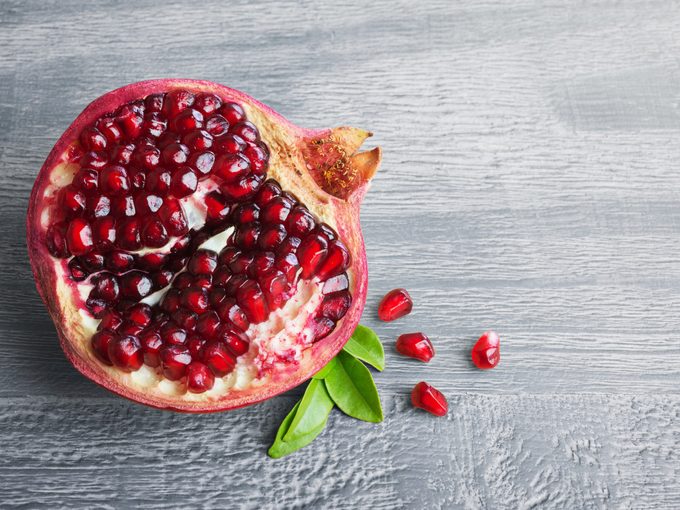
This exotic fruit, whose juice has gained in popularity since it was first marketed in North America, is considered a superfruit. It’s loaded with vitamins C and B, potassium, folic acid and iron. And each of the crunchy, edible seeds is a source of fibre.
Preliminary studies suggest pomegranates may contain nearly three times the antioxidants of green tea or red wine, and may play a role in the prevention of cancer and heart disease.
Available from October through January, pomegranates are packed with hundreds of red arils, translucent capsules filled with a sweet or tart juice and a tiny seed. A ½ cup of arils has just 80 calories, but it packs a nutritional wallop: 5 grams of fibre and 180 mg of potassium.
A pomegranate’s arils can be eaten alone, or used as a garnish. Sprinkle them on salads or mix them into your oatmeal or yogurt. You can also add them to baked goods, such as muffins or cookies.
Some Like it Raw
The pomegranate has a thick reddish skin and hundreds of seeds. The tiny arils are surrounded by a bitter, inedible white pulp.
It’s a labour-intensive fruit, but now that we know how nutritious it is, it’s probably worth the effort to crack one open and give it a try.
To eat a pomegranate, first cut off the top of the fruit, then score the rind with a knife (as you would to peel an orange). Place it in a bowl of water-to prevent the pomegranate juice from squirting-and break it into sections. Push the arils out, separating them from the pith and other membranes. The arils will sink while the membranes will float to the top. Simply strain the water and the arils are ready to eat, seeds and all.
You can store fresh unopened pomegranates at room temperature for a week or two, or place them in the crisper, where they’ll keep for over a month. Fresh arils can be frozen for up to a year, in an airtight bag.